


 PLATFORM UPDATE:


The inhibitors of 17β-HSD10: are they any good?

Abstract
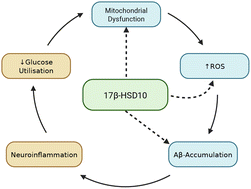
The advent of the first disease-modifying therapies for Alzheimer's disease (AD) has renewed optimism for effective prevention and treatment strategies. Growing mechanistic insights indicate that AD pathogenesis is multifactorial and non-linear, better conceptualized as a circular vortex in which interconnected pathological processes reinforce one another. This complexity highlights the necessity for multiple druggable targets and combination-based therapeutic approaches. A hallmark of AD is reduced cerebral glucose utilization, revealed by positron emission tomography studies, reflecting profound metabolic disruption and mitochondrial dysfunction. Among mitochondrial candidates, 17β-hydroxysteroid dehydrogenase type 10 (17β-HSD10), encoded by HSD17B10, has emerged as a protein of interest. Despite debate surrounding its substrate specificity due to conflicting in vitro data, its elevated expression in neurons and astrocytes within AD brains underscores its potential relevance. This review outlines chemical entities targeting both catalytic and non-catalytic functions of 17β-HSD10 and examines whether its inhibition offers biological efficacy and clarifies its metabolic roles in the living brain.
 Please wait while we load your content...


