


 PLATFORM UPDATE:


Towards supramolecular regenerative medicine using low-molecular-weight gelator hydrogels for stem cell growth

Abstract
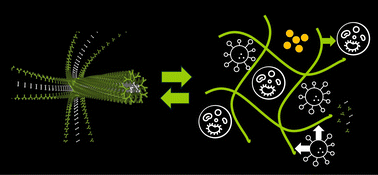
This review explores gels that assemble from low-molecular-weight gelator (LMWG) building blocks for use in cell culture, with a focus on fibroblasts and stem cells. These LMWG hydrogels have unique potential for controlling and directing cell growth. We provide an overview of gel tunability and how careful molecular design can direct biological outcomes. The LMWG hydrogel approach to cell growth is based on reversible assembly, potentially enabling cells to be encapsulated and subsequently released. It is possible to easily formulate multiple active ingredients into LMWG hydrogels by co-assembly – a powerful strategy to create multi-functional hybrid hydrogels. Rheological properties can be tuned over orders of magnitude, with stiffness helping control properties like cell invasion or stem cell differentiation. Furthermore, gel dynamics at both molecular and network levels can control factors such as cell adhesion. By developing strategies to shape and pattern these gels, it is possible to create structured assemblies of cells or direct the growth of multi-functional biological tissues. The dynamic characteristics of these gels enables them to evolve, potentially facilitating 4D tissue engineering or the creation of materials that are both bio-instructive and bio-responsive. LMWG hydrogels have been applied both in vitro and in vivo and some are in commercial use. This critical review provides an overview of progress to date, emphasising the unique advantages of the LMWG hydrogel approach, and highlighting concepts that might unlock untapped potential, hence transforming next-generation regenerative medicine.
 Please wait while we load your content...


