


 PLATFORM UPDATE:

The LDH biological hybrid promotes electron transfer via dual starvation enhancing tumor ferroptosis/apoptosis
 *b
and
Jintao
Zhu
*b
*b
and
Jintao
Zhu
*b
Abstract
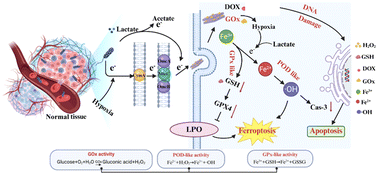
Current strategies for metabolic regulation within the tumor microenvironment (TME) often rely on exogenous drugs, leading to transient benefits and necessitating repeated administrations that frequently cause detrimental side effects. To address this, we have developed a novel bacterial biocatalytic reactor, LDGM, which is fabricated by functionalizing Shewanella oneidensis MR-1 (MR-1) bacteria with DOX/GOx-loaded layered double hydroxide (LDH) nanosheets. This sophisticated biomaterial exhibits specific targeting towards hypoxic tumor areas, facilitating the controlled release of doxorubicin (DOX), glucose oxidase (GOx), and Fe3+. Crucially, MR-1 continuously metabolizes intratumoral lactate, thereby augmenting chemotherapy efficacy and combating tumor multidrug resistance. Moreover, with the hypoxic environment generated by GOx and lactate metabolism, MR-1 performs iron respiration, promoting the reduction of Fe3+ through electron transfer to simultaneously induce ferroptosis and apoptosis. Our investigations in murine tumor models showed that LDGM significantly suppresses tumor progression while simultaneously enhancing ferroptosis and apoptosis. Therefore, this living biomaterial presents a promising avenue for advancing cancer therapy by establishing continuous metabolic regulation of the intratumoral lactate/glucose microenvironment.
 Please wait while we load your content...


