


 PLATFORM UPDATE:


A Janus-structured PVA/collagen membrane co-loaded with Orthosiphon aristatus extract and DMOG for diabetic wound healing
 *a
and
Yu-Qing
Zhang
*d
*a
and
Yu-Qing
Zhang
*d
Abstract
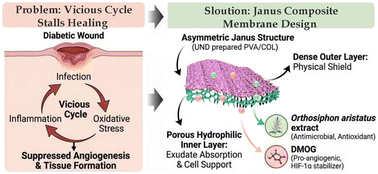
Diabetic wounds are difficult to heal because infection, inflammation, and oxidative stress reinforce each other and collectively suppress vessel growth and tissue formation. Herein, we describe a composite membrane with an asymmetric Janus structure prepared via the unidirectional nanopore dehydration (UND) of polyvinyl alcohol (PVA) and collagen (COL). The dense outer layer acts as a physical shield, while the porous hydrophilic inner layer absorbs exudates and supports cells. The therapeutic functionality of the membrane was ensured by incorporating a dual-component bioactive system—an aqueous extract of Orthosiphon aristatus (recognized for its potent antioxidant and broad-spectrum antimicrobial properties) and dimethyloxalylglycine (DMOG, a pro-angiogenic HIF-1α stabilizer). Further, its graded bilayer morphology, secondary structure, hydrophilicity, mechanical performance, and sustained DMOG release were verified. In vitro, the membrane exhibited no cytotoxicity, scavenged DPPH and intracellular ROS, eliminated E. coli and S. aureus, accelerated fibroblast migration, and increased endothelial tube formation. Further, in diabetic rats, the prepared membranes accelerated wound closure; increased COL deposition; and, most importantly, reprogrammed the wound immune environment: the level of pro-inflammatory cytokines (IL-1β and IL-6) fell while that of anti-inflammatory markers (ARG1 and IL-10) rose. Furthermore, no systemic toxicity was detected. By coupling a skin-mimetic physical design with two complementary bioactive agents, the Janus membrane herein breaks the pathological circuits that stall diabetic wound repair and demonstrates potential for clinical translation.
 Please wait while we load your content...


