


 PLATFORM UPDATE:


Supramolecular RNAi with multifunctional siRNA nanostructures
 *ac
*ac
Abstract
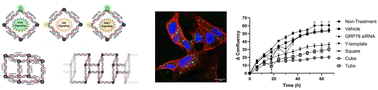
Supramolecular RNA nanostructures have recently emerged as powerful genetic tools in biomedical applications. The modular design of discrete RNA building block monomers for the self-assembly of genetically encoded short interfering RNA (siRNA) nanostructures has led to the precise silencing of oncogene targets in cancer gene therapy applications. In this study, we designed and synthesized V- and Y-shaped branched RNA templates to scaffold the assembly of well-defined 2D- and 3D-shaped siRNA nanostructures targeting the oncogenic mRNA transcripts of Glucose Regulated Proteins (GRP75, 78, 94, 170) in cancer. Structure and stability analyses confirmed the formation of siRNA nano-squares, -cubes and -tubes with distinct supramolecular and biophysical properties. Bioconjugation strategies enabled the incorporation of fluorescein and coumarin fluorescent reporters, providing FRET-based biosensing of the dynamic assembly process of the siRNA nanostructures. In the human adenocarcinoma (A549) cell line, the fluorescently labelled siRNA nanostructures demonstrated cell uptake and intracellular localization for GRP silencing events that led to significant anti-proliferative and toxicity effects, as indicators of anti-cancer activity. This research will highlight the innovation of multifunctional siRNA nanostructures for applications in cancer gene-silencing therapies.
- This article is part of the themed collection: Biomaterials Science Open Access Spotlight
 Please wait while we load your content...


