


 PLATFORM UPDATE:


DNA-based hybrid nanoparticles: from design to application in cancer therapy
 *ab
Dayong
Yang
*abc
*ab
Dayong
Yang
*abc
Abstract
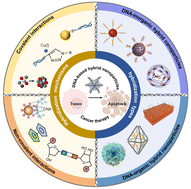
Deoxyribonucleic acid (DNA)-based hybrid nanoparticles represent a cutting-edge class of advanced nanomaterials engineered by integrating functional inorganic or organic components with programmable DNA scaffolds. These hybrid systems synergistically combine the unique optical, magnetic, and thermal properties of functional components with the exceptional molecular recognition, programmability, and biocompatibility of DNA, achieving multifunctionality not attainable with single-component platforms. The review systematically summarizes the hybrid strategies and unique characteristics of DNA-based hybrid nanoparticles, highlighting their key advantages in oncology. Their therapeutic potential is surveyed across gene editing and silencing, non-invasive therapies activated by physical energy (light, sound, heat), immunotherapy, and integrated diagnosis and treatment. Finally, current challenges and future directions for clinical translation are discussed, emphasizing the integration of intelligent design, scalable manufacturing, and safety evaluation. This review aims to provide a comprehensive and forward-looking resource for researchers advancing toward clinically viable DNA-based hybrid systems for cancer therapy.
 Please wait while we load your content...


