


 PLATFORM UPDATE:


Bioinspired scaffold design using a custom Voronoi path generator for extrusion-based 3D printing

Abstract
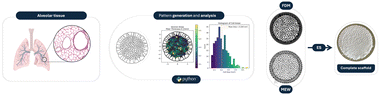
Natural systems are often arranged into specialized patterns, conferring unique biological features and functions to tissues and organs. Engineered microenvironments, aiming to support cell cultures and tissue-specific functions, have to accurately recreate biological arrangements for the development of relevant biological models. To this aim, we designed a custom Python-based software tool to produce the biomimetic and irregular structure known as the Voronoi pattern by extrusion-based additive manufacturing techniques—melt electrowriting (MEW) and fused deposition modelling (FDM). The printed Voronoi backbone was integrated with an electrospun nanofibrous membrane, providing a multiscale construct that combines the morphological fidelity of additive manufacturing with the ECM-like features of electrospinning. As the Voronoi arrangement is observed in lung tissue organization, we cultured alveolar epithelial and endothelial cells on the upper and lower sides of the construct, respectively, to reassemble the alveolar-capillary barrier in vitro. The culture was maintained under air–liquid-interface (ALI) conditions for 10 days, reaching complete coverage of the two sides of the construct and a physiological-like organization of the cells within the biomimetic architecture. Overall, this study introduces a flexible approach that merges digital design and hybrid fabrication to manufacture in vitro tissue models that more closely mimic physiological environments.
- This article is part of the themed collections: 34th Annual Conference of the European Society for Biomaterials, an official ESB2025 collection and Biomaterials Science Open Access Spotlight
 Please wait while we load your content...


