


 PLATFORM UPDATE:


Surface modification of intraocular lenses with zwitterionic poly(carboxybetaine) for posterior capsular opacification prevention
 *a
and
*a
and
Abstract
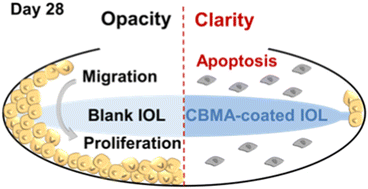
Posterior capsular opacification (PCO) remains the most common long-term complication after cataract surgery, primarily caused by adhesion and proliferation of residual lens epithelial cells (LECs) on the intraocular lens (IOL) surface. Here, we report a zwitterionic carboxybetaine-coating strategy to endow IOLs with anti-adhesive and anti-fibrotic properties without compromising optical clarity. The zwitterionic monomer carboxybetaine methacrylate (CBMA) was grafted onto the IOL surface via plasma activation, forming a stable antifouling interface. The CBMA-coated surface exhibited reduced water contact angle and smooth, uniform morphology while preserving optical transparency. Both anti-adhesion assays and IOL implantation studies confirmed that the highly antifouling CBMA coating markedly inhibited LEC adhesion, suppressed PCO formation, and maintained excellent biocompatibility. This work establishes a surface modification approach that integrates zwitterionic chemistry with clinical biomaterials, providing a promising pathway toward next-generation IOLs with intrinsic PCO-preventive functionality.
- This article is part of the themed collection: Biomaterials Science Open Access Spotlight
 Please wait while we load your content...


