


 PLATFORM UPDATE:


Deep neurotherapeutic strategy for ischemic stroke via focused ultrasound-enhanced delivery of curcumin-loaded antioxidant nanoliposomes
 *d
Ru-Shi
Liu
*a
*d
Ru-Shi
Liu
*a
Abstract
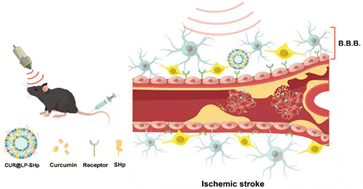
Ischemic stroke is the most common type of stroke, accounting for 80% of all stroke cases, and is increasingly affecting younger individuals due to changes in lifestyle, diet, and environment. Conventional treatments such as thrombolytic agents and mechanical thrombectomy can rapidly restore blood flow but are limited by narrow therapeutic time windows and complications like ischemia–reperfusion injury (IRI) and cerebral hemorrhage. These limitations highlight the need for strategies that provide both vascular and neuroprotective benefits. This study introduces a targeted nanotherapy approach using focused ultrasound (FUS) and Sonazoid™ microbubbles to temporarily open the blood–brain barrier (BBB) via cavitation, enabling drug delivery to hypoxic brain regions. Curcumin (CUR), a natural antioxidant with neuroprotective effects, was encapsulated in liposomes (CUR@LP) and functionalized with a stroke homing peptide (SHp) to form CUR@LP-SHp nanoparticles. After systemic administration and FUS-induced BBB modulation, CUR@LP-SHp accumulated in ischemic tissue. In a photothrombotic stroke model, this treatment significantly reduced infarct volume by 92% and decreased expression of glial fibrillary acidic protein (GFAP) by 80%. Histological and protein analyses confirmed reduced oxidative stress and enhanced preservation of vascular and neuronal function. This novel delivery platform improves CUR's bioavailability and brain targeting, offering a promising, safe, and effective therapeutic strategy for ischemic stroke.
 Please wait while we load your content...


