


 PLATFORM UPDATE:


Modular noncovalent functionalization of electrospun piezoelectric scaffolds with bioactive nanocarriers

Abstract
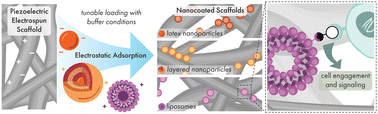
Electrospun scaffolds offer a promising platform for immune-instructive materials, but stable and modular functionalization with bioactive signals remains a technical challenge. Here, we develop a surface coating strategy for electrospun scaffolds that consist of poly(vinylidene fluoride-trifluoroethylene) (PVDF-TrFE), a piezoelectric polymer, using electrostatic adsorption of charged nanoparticles. We show that under certain conditions, these piezoelectric scaffolds are suitable substrates for electrostatic self-assembly, and that the density of nanoparticle coatings can be tuned by adjusting buffer pH, ionic strength, and nanoparticle concentration. This approach enables robust and uniform coating with both polymeric nanoparticles and soft nanocarriers such as liposomes, without requiring covalent surface modification of the scaffold. Liposome-coated scaffolds are cytocompatible with adherent epithelial and suspension immune cells and support lipid exchange at the cell–material interface. Using a supramolecular tethering strategy, we use liposome coatings to present interleukin-15 (IL-15) from the scaffold surface and demonstrate localized, sustained cytokine signaling. Together, these findings establish a modular approach for post-fabrication, noncovalent scaffold functionalization with bioactive nanocarriers, offering new opportunities for tissue and immune engineering.
- This article is part of the themed collections: Biomaterials Science Emerging Investigators, Biomaterials Science Open Access Spotlight and Biomaterials Science Emerging Investigator Series
 Please wait while we load your content...


