


 PLATFORM UPDATE:


Red blood cell-derived extracellular vesicles as biomaterials: the opportunity of freezing-induced accelerated aging

Abstract
Red blood cell-derived extracellular vesicles (RBC-EVs) are emerging as promising biomaterials for next-generation drug delivery, owing to their intrinsic biocompatibility, immune-evasion properties, and minimal oncogenic risk. However, their broader application is currently limited by unresolved challenges related to heterogeneity, reproducibility, and long-term storage stability. By combining discontinuous sucrose density gradient separation with high-resolution interferometric nanoparticle tracking analysis, we identified a sharp bimodal size distribution of vesicles in freshly prepared samples. We then tracked how long-term storage at −80 °C drove their conversion into a monomodal distribution. To reproduce these conditions in a shorter time frame, we developed an “accelerated-ageing” protocol based on freeze–thaw cycles that generates RBC-EV samples with homogeneous density, size distribution, and biological activity, effectively replicating the properties of preparations stored for six months at −80 °C. This new vesicle population remains stable and retains membrane integrity and cellular internalization capacity, as confirmed by surface-associated enzymatic activity assays and uptake tests in cancer cell lines. These results suggest that freezing-induced “accelerated ageing” represents an effective method for the optimization and standardization of RBC-EVs as building blocks for biomaterial and bioengineering applications.
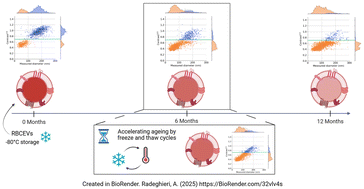
- This article is part of the themed collections: Biomaterials Science Recent HOT Articles, Biomaterials Science Open Access Spotlight 2025 and Biomaterials for theranostics and tissue engineering, an official WBC2024 collection
 Please wait while we load your content...


