


 PLATFORM UPDATE:


Ultrasound-powered MXene hydrogels for enhancing tumor inhibition and immune stimulation by the piezoelectric effect

Abstract
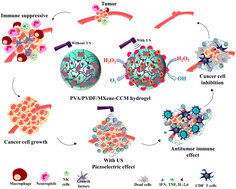
Cancer immunotherapy has attracted tremendous attention. To improve the response rate of immune checkpoint inhibitors and tumor antigens in immunosuppressive cancer, the induction of piezoelectric-triggered cancer cell death can increase antigenicity. Herein, we construct a piezoelectric poly(vinyl alcohol) (PVA)/polyvinylidene fluoride (PVDF)/MXene hydrogel loaded with a biomimetic cancer cell membrane (CCM) that incorporates TLR7/8a/anti-PD-L1. The CCM surface proteins act as tumor-specific antigens. Poly(lactic-co-glycolic acid) (PLGA) is used to enhance the stability and attachment of the MXene. After adding the MXene, the hydrogel exhibits a higher piezoelectric coefficient, greater electrical signal yield with superior stability, and excellent mechanical strength. Ultrasound (US) enhances the piezoelectric effect of the PVA/PVDF/MXene-CCM hydrogel. This is confirmed through in vitro reduction and oxidation catalysis reactions. The US-stimulated electrical signal inhibits cancer cells via apoptosis induction, endoplasmic stress, and mitochondrial membrane depolarization. It leads to the secretion of danger-associated molecular patterns into the cytoplasm, which promotes dendritic cell maturation and cytotoxic T-lymphocyte infiltration, thereby reversing the immunosuppressive tumor microenvironment. In vivo studies show that the hydrogel offers great therapeutic efficacy to control tumor growth due to the combined effects of the piezoelectric effect and immune checkpoint blockade (ICB) therapy. It improves dendritic cell maturation and increases cytotoxic T-cells. Therefore, our work presents a novel piezoelectric hydrogel and new therapeutic strategies with great potential and versatility for treating breast cancers.
 Please wait while we load your content...


