


 PLATFORM UPDATE:


Core–shell hydrogel microspheres with sequential drug release and magnetothermal synergy for drug-resistant ovarian cancer
 b
Wei
Zhang
*a
and
b
Wei
Zhang
*a
and
Abstract
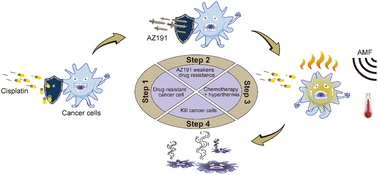
Ovarian cancer (OC) is one of the most fatal malignant tumors of the female reproductive system, and its high recurrence rate in advanced stages and drug resistance severely limit the efficacy of current treatment methods. The molecular mechanisms of drug resistance are complex and remain incompletely understood. Previous studies have attempted to enhance treatment sensitivity by co-delivering antitumor drugs with inhibitors of drug resistance-associated factors. However, these approaches often suffer from inadequate therapeutic efficacy and poor precision due to the inability to precisely control the sequential release of the two agents. To address this, this study designed and constructed a core–shell hydrogel microsphere (MSs) system with both sequential release and magnetothermal synergy functions to effectively intervene in drug-resistant OC. In this system, the shell layer is loaded with the DYRK1B inhibitor AZ191, which is released preferentially to disrupt drug-resistant signaling pathways and sensitize tumor cells. Subsequently, the core layer releases cisplatin to achieve sustained killing of tumor cells. In addition, magnetic nanoparticles embedded in the core can be heated to 42–46 °C under an alternating magnetic field, inducing thermosensitive apoptosis and enhancing cisplatin efficacy. This approach holds promise as a non-invasive alternative to traditional hyperthermic intraperitoneal chemotherapy (HIPEC). In vitro drug release experiments demonstrated that AZ191 exhibited rapid release within the first three hours with a cumulative release of approximately 26%, whereas cisplatin showed minimal early release (∼5%) followed by a markedly accelerated release. In vitro antitumor studies confirmed that the combined chemo-hyperthermia treatment using the core–shell MSs produced the most effective inhibitory effect on drug-resistant OC cells, reducing cell viability to 21% after 48 h, significantly outperforming either chemotherapy or hyperthermia alone. This strategy enables a “resistance-reversal first, precision-killing later” treatment model, offering a novel and effective solution for the treatment of drug-resistant OC.
 Please wait while we load your content...


