


 PLATFORM UPDATE:

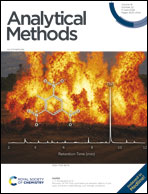
Mahonia-derived carbon dots for dual-ion ratiometric sensing and cellular bioimaging

Abstract
The presence of hexavalent chromium (Cr6+) and silver ions (Ag+) in pharmaceutical systems poses significant safety concerns due to their toxicity and bioaccumulation potential. Therefore, the development of rapid, reliable, and matrix-tolerant sensing platforms is highly desirable. Herein, ultra-small carbon quantum dots (CDs, ∼0.982 nm) were synthesized from Mahoniae Caulis extract and m-phenylenediamine (m-PD) as carbon and nitrogen sources. The natural heteroatoms and phytochemicals in Mahoniae Caulis endowed the CDs with abundant surface functionalities, strong green fluorescence, and excellent water dispersibility. Based on dynamic and static quenching effects, the CDs acted as a ratiometric fluorescent probe for simultaneous detection of Ag+ and Cr6+ with high sensitivity and selectivity. Good linear relationships were obtained for Ag+ (0–2.5 µM) and Cr6+ (0–40 µM) with detection limits of 0.03 µM and 2.2 µM, respectively. The probe also exhibited strong anti-interference capability in complex herbal matrices, and the results were consistent with ICP-MS analysis, confirming its analytical reliability. The ratiometric strategy enabled effective self-calibration and reduced environmental and instrumental interference compared with conventional single-emission probes. In addition, the CDs showed favorable biocompatibility and fluorescence properties. This work provides a sustainable approach for constructing multifunctional CDs and demonstrates their potential for heavy-metal monitoring and quality control in natural products and traditional Chinese medicines.

- This article is part of the themed collection: Analytical Methods HOT Articles 2026
 Please wait while we load your content...


