


 PLATFORM UPDATE:


A low-cost, high-throughput DNA quantification system using light pipe arrays for parallel fluorescence measurement
 *a
and
*a
and
Abstract
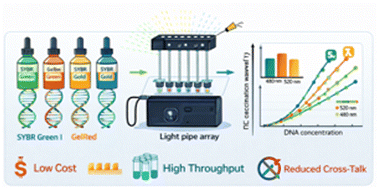
Accurate DNA concentration measurement is essential for molecular biology, enabling precise quantification and optimization of various experimental protocols. While UV absorbance at 260 nm is common, fluorometric methods using fluorescent dyes such as SYBR Green I, GelRed, and SYBR Gold offer superior sensitivity and specificity, particularly for low-concentration samples. However, traditional single-channel designs suffer from cross-talk and low throughput. To address this, we developed a high-throughput, low-cost, and compact DNA concentration measurement system. The system integrates an LED array, optical filters, and eight independent light pipes for simultaneous measurement of eight samples, effectively eliminating cross-talk and enhancing both accuracy and throughput. Experimental results demonstrated that DNA/dye mixtures in 0.5× TBE buffer emitted significantly stronger fluorescence under specific LED excitations (480 nm for SYBR Green I and SYBR Gold; 520 nm for GelRed) compared to mixtures in 1× TAE or ultrapure water. For all dyes, fluorescence intensity increased with dye concentration up to an optimal point before declining. The optimal dye concentrations for DNA quantification were determined to be 3× for GelRed, 8× for SYBR Gold, and 25× for SYBR Green I. The system achieved a high correlation coefficient (R) of above 0.92 for all dyes, with SYBR Green I demonstrating the best performance (R = 0.972–0.996) and superior fluorescence stability (relative standard deviation < 2.55%), outperforming GelRed and SYBR Gold. This easy-to-assemble system, built at a cost of under $100, provides a reliable and efficient platform for parallel DNA concentration analysis. Its high throughput, excellent stability, and minimized cross-talk significantly reduce measurement time and cost, making it highly suitable for routine molecular biology laboratories and large-scale studies, ultimately improving experimental accuracy and workflow efficiency.
 Please wait while we load your content...


