


 PLATFORM UPDATE:


Chemometric evaluation of the CUPRAC assay for propolis quality control: a decision-making framework for deciphering antioxidant paradoxes
 *a
*a
Abstract
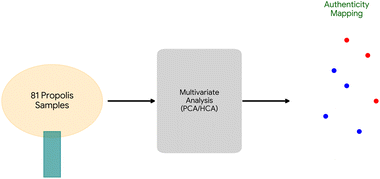
The antioxidant capacity of propolis is traditionally inferred from single compositional indicators such as total phenolic (TPC) or flavonoid content (TFC). However, these reductionist approaches often overlook complex inter-compound dynamics, leading to ‘antioxidant paradoxes’ and inconsistent quality assessments. To address this gap, our study introduces a structured analytical workflow that transitions from descriptive profiling to a decision-oriented quality control model. By examining the reliability of the Cupric Reducing Antioxidant Capacity (CUPRAC) assay within an integrated chemometric framework, a diverse library of 81 propolis samples was analyzed to challenge the interpretative robustness of univariate measurements. An integrated multivariate strategy, incorporating Z-score normalization, Principal Component Analysis (PCA), and Hierarchical Cluster Analysis (HCA), was employed to decouple mass-quantification from functional performance. Despite strong global correlations (r > 0.92), multivariate modeling revealed significant analytical discrepancies at the sample level. Standardized Z-score profiles and 95% confidence ellipses effectively exposed ‘paradoxical’ cases where samples with near-identical TPC levels exhibited different functional outcomes. Based on these findings, we propose concrete decision rules—including a Z-score deviation threshold of ±2.0—to serve as a diagnostic trigger for industrial quality control. This research provides a robust methodological framework for data-driven quality assurance, offering a clear regulatory template for the assessment of propolis and other bioactive-rich matrices.
 Please wait while we load your content...


