


Synergistic non-covalent-recognition-enabled highly efficient through-space charge transfer for specific synthetic cannabinoid EG-2201 detection
 *a
Xincun
Dou
*abc
and
*a
Xincun
Dou
*abc
and
Abstract
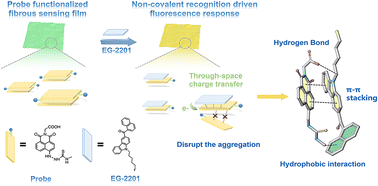
Specific-recognition-enabled trace-level precise detection of analytes with intrinsic low chemical reactivity is of great significance, yet its realization is challenging as such analytes cannot be effectively identified via active covalent reactions. Here, a naphthalimide-based fluorescent-probe-enabled sensing strategy for the synthetic cannabinoid EG-2201 is proposed, wherein the synergistic recognition via multiple non-covalent interactions led to the dissociation of the original aggregate of the probe, thereby triggering an efficient intermolecular charge-transfer process and a distinct fluorescence response from green to yellow. A high-performance ratiometric fluorescence sensing system was further constructed based on this mechanism, featuring a low limit of detection (0.4 µM), rapid response (2 s) and robust anti-interference against 15 potential interferents. Additionally, a probe-anchored sensing film was integrated into the indigenously developed Drugs Analyst to visually detect EG-2201 in diverse adulterated samples, enabling its precise detection, irrespective of the sample's physical state and background color and without interference from the concomitant components of the complex media. Overall, this work provides new insights into designing probes that detect low-reactivity analytes and advances the development of non-covalent-interaction-driven sensing recognition by enhancing TSCT efficiency.
- This article is part of the themed collection: Analytical Methods HOT Articles 2026
 Please wait while we load your content...


