


 PLATFORM UPDATE:


Airborne microplastics: environmental prevalence, human health risks, and mitigation strategies
 *a
and
*a
and
Abstract
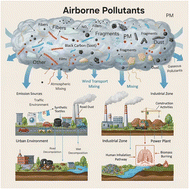
This critical review aims to (1) summarize methodologies for sampling and characterizing atmospheric microplastics (MPs), (2) evaluate their environmental prevalence and associated health hazards, (3) highlight deficiencies in toxicological research, and (4) provide strategies for mitigation. Atmospheric MPs (smaller than 5 mm) represent an emerging air pollution threat with significant health implications. This review consolidates findings from 156 peer-reviewed papers published between 2000 and 2025, reporting airborne MP concentrations ranging from 370 particles m−2 day−1 in the Pyrenees to 600 particles m−2 day−1 in urban areas of China. Synthetic fabrics account for 29–66% of atmospheric fibres, while tyre wear is the main source of larger fragments. MPs can remain airborne for 1 to 6.5 days, allowing for transcontinental distribution to remote regions such as the Arctic and Pyrenees via wind patterns. Vegetation acts as a temporary reservoir for MPs before they are ultimately deposited in soil and water, contributing to up to 80% of oceanic MPs in certain areas. Annual human inhalation exposure is estimated to exceed 1 million particles, and occupational studies have linked polyvinyl chloride (PVC)/polypropylene (PP) dust to interstitial lung disease and a 3.6-fold increase in respiratory symptoms. The research is crucial for addressing current gaps in toxicological knowledge and for developing effective mitigation strategies. Highlighting the gap in studying inhaled airborne MPs can inspire researchers to focus on this vital area, making them feel that their work is impactful and needed. There is a significant gap in the study of the toxicity of inhaled airborne MPs, with implications for toxicological investigations. Significant deficiencies remain in understanding the toxicological effects of airborne MP inhalation, ocular surface impacts, and atmospheric transition chemistry. Mitigation necessitates the control of sources (textile filters and tyre recycling) in conjunction with sophisticated detection methods (FTIR, Raman, Py-GC/MS). Urgent incorporation of policy measures into air quality standards is necessary to tackle this widespread atmospheric pollutant issue.
- This article is part of the themed collection: Analytical Methods Review Articles 2026
 Please wait while we load your content...


