


 PLATFORM UPDATE:


Establishment and application of a method for detecting tetracycline antibiotics in milk based on AlphaLICA technology
 *a
*a
Abstract
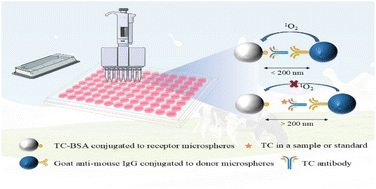
Addressing the challenges of strong matrix interference, cumbersome procedures, and urgent demand for on-site rapid detection in the analysis of tetracycline antibiotic (TCA) residues in milk, this study aims to develop an efficient, rapid screening method based on the amplified luminescence proximity homogeneous assay (AlphaLICA) technology for the direct detection of tetracycline (TC) and other TCA residues in milk. By conjugating TC–BSA complexes to receptor microspheres and goat anti-mouse IgG antibodies to donor microspheres, this approach effectively overcomes interference from milk fat and casein, enabling wash-free, homogeneous detection. This method exhibits high sensitivity (limit of detection (LOD): 0.16 ng mL−1; limit of quantification (LOQ): 0.83 ng mL−1), with a linear range of 0.83–32 ng mL−1. Spiked recovery rates reached 100.95–114.78% (relative standard deviation (RSD) ≤ 8%), while intra- and inter-batch coefficients of variation (CV) ranged from 3.89%–13.24% and 4.34–13.52%, respectively. Cross-reactivity with non-TC antibiotics remained low (CR ≤ 10.68%). Compared to the traditional enzyme-linked immunosorbent assay (ELISA, 75 minutes, requiring washing), this method requires only 10 minutes and is wash-free. The results of actual sample testing showed high consistency with the reference method (Y = 0.7685X + 0.4623, r2 = 0.952, p < 0.001). This study provides a reliable technical solution for high-throughput rapid field monitoring of TCA residues in milk.
 Please wait while we load your content...


