


 PLATFORM UPDATE:


A robust approach based on QuEChERS combined with GC-MS for determination of three typical liquid crystal monomers in mouse serum and various tissues
 a
a
Abstract
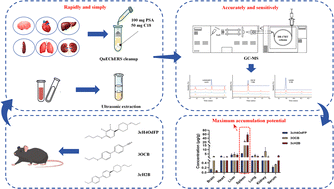
Liquid crystal monomers (LCMs) are emerging organic pollutants to which humans are chronically exposed at low doses. Accurate quantification of LCMs in biological matrices remains challenging due to their low environmental concentrations and significant matrix effects. By optimizing the GC-MS conditions and the sample pretreatment process, this study developed a novel approach for robust determination of three LCMs including 2,3-difluoro-4-(trans-4-propylcyclohexyl) butoxybenzene (3cH4OdFP), 4-propoxy-4′-cyanobiphenyl (3OCB), and 4-ethyl-4′-(4-propylcyclohexyl)-1,1′-biphenyl (3cH2B) in mouse serum, brain, heart, liver, spleen, lung, and kidney tissues. Serum samples were extracted with n-hexane, while tissues were extracted using acidified acetonitrile followed by QuEChERS cleanup. Separation was achieved on a DB-17HT column, and detection was performed in selected ion monitoring (SIM) mode of GC-MS. The method demonstrated good linearity (r2 > 0.995) from 0.5 ng mL−1 to 200 ng mL−1. Limits of detection were 0.2 ng g−1 for tissues and 1.0 ng mL−1 for serum. Average recoveries ranged from 74.32% to 126.04%, with intra-day and inter-day precision in the range 2.17–18.53% and 3.75–19.13%, respectively. The validated method was successfully applied to exposed mice, revealing widespread tissue distribution of the three LCMs. The concentration ranges in serum and tissues were as follows: 3cH4OdFP (Not Detected (ND)–6.1978 µg g−1), 3OCB (ND–30.1073 µg g−1), and 3cH2B (ND–67.3851 µg g−1). The spleen exhibited a higher accumulation potential. This sensitive and reliable method provides a robust tool for monitoring LCMs in toxicological research and assessing internal exposure, while also revealing their potential immunotoxicity.
 Please wait while we load your content...


