


 PLATFORM UPDATE:

Alkaline extraction with tetramethylammonium hydroxide for mercury determination in fish samples by CV-MIP AES as an alternative to conventional sample preparation methods
 ab
and
Alicia
Mollo
*b
ab
and
Alicia
Mollo
*b
Abstract
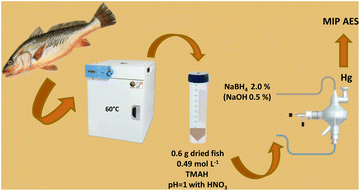
Aquatic animals are capable of absorbing inorganic elements such as mercury (Hg) from soil, sediment and water, which is biomagnified, and due to human intake, it represents a potential risk of toxicity. Its presence is studied in foods of aquatic origin to guarantee the safe consumption of products by humans. In this work, we present the development of a method for mercury determination in fish samples by CV-MIP AES after alkaline extraction with tetramethylammonium hydroxide. Fresh fish samples and a certificate reference material of mussel tissue and dogfish liver were evaluated for extraction optimisation. The reported method involved the addition of 3.5 mL of TMAH 25% w/w in water to 0.6 g of sample (dried and milled), followed by homogenisation using a vortex, and the solution was allowed to stand overnight. The resulting suspension was neutralised and acidified with HNO3, and the volume was made up to 20.0 mL with purified water. The mercury determination was performed by CV-MIP AES using NaBH4 2% w/v in NaOH 0.5% v/v. The limit of detection (3 s) and limit of quantification (10 s) were 0.0029 mg kg−1 and 0.0096 mg kg−1, respectively, the linear range was 1.3–10.4 µg L−1 and the precision of repeatability was 13.3%. The trueness was assessed by comparing the mean value obtained with the two reference materials by Student's t-test. Fish samples were analysed by the proposed method and by the most common acidic microwave-assisted digestion method. The results obtained were statistically equivalent at the 95% significance level. The proposed method could be postulated as an easy-to-handle and environmentally friendly alternative to the classic methods that use acidic digestion.
 Please wait while we load your content...


