


 PLATFORM UPDATE:


A FRET-based NCA fluorescent probe for highly sensitive and selective detection of hydrogen sulfide
 *a
*a
Abstract
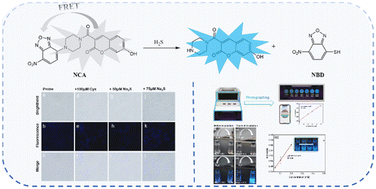
A Förster resonance energy transfer (FRET)-based fluorescent probe (NCA) was developed for highly sensitive and selective detection of hydrogen sulfide (H2S). In this design, coumarin (CA) serves as the fluorescent donor and nitrobenzoxadiazole (NB) acts as an energy acceptor and reactive site. Upon exposure to H2S, cleavage of the NB unit interrupts the FRET process and restores CA fluorescence, producing a 16-fold signal enhancement at 463 nm with a detection limit of 0.11 µM. Under optimized conditions (Britton–Robinson (BR) buffer, pH 8, 15 min), NCA enables rapid and selective detection of H2S over competing biological species. Practical applications were demonstrated by integrating NCA into a smartphone-assisted test strip platform, which achieved recoveries of 98.7–109.9% in tap and lake water. Furthermore, NCA successfully imaged both endogenous and exogenous H2S in human lung carcinoma (A549) cells with low cytotoxicity. These results highlight the potential of NCA as a versatile tool for environmental monitoring and biological studies of H2S.
 Please wait while we load your content...


