


 PLATFORM UPDATE:


Enhanced protein binding to off-stoichiometry thiol–ene microfluidic devices: a novel linker approach

Abstract
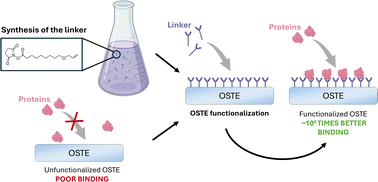
Microfluidic devices have proven to be a valuable innovation in medical and biological research, offering a fast and efficient platform for testing. Among the materials used for constructing microfluidic channels, off-stoichiometry thiol–ene (OSTE) polymers are especially promising due to their ease of fabrication and lower small-molecule absorption compared to the current gold-standard material, polydimethylsiloxane (PDMS). However, some studies have indicated that there are challenges with binding molecules to the surface thiol groups as they are easily oxidized in air. In this study, a novel linker was synthesized and evaluated for its performance at binding proteins to the surface of OSTE polymer, using a custom-built spectroscopic measurement system. In addition, the results obtained were compared to regular enzyme-linked immunosorbent assay (ELISA) plates and performance of the linker in functionalized microfluidic chips was investigated. Our results indicate that the synthesized linker binds proteins to the OSTE surface and can offer a similar performance to ELISA plates in protein concentration tests highlighting its potential for use in microfluidic chip functionalization.
 Please wait while we load your content...


