


 PLATFORM UPDATE:


Targeted metabolomics of nucleotide intermediates for biomarker discovery in acute kidney injury
 *ab
and
*ab
and
Abstract
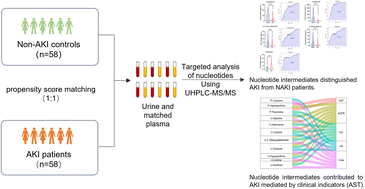
Acute kidney injury (AKI) is a common syndrome among critically ill patients with high incidence and high mortality, characterized by elevated serum creatinine (SCr) and uric acid (UA) levels. Given that xanthine is a key intermediate in nucleotide metabolism and the direct precursor of UA, profiling of nucleotide metabolic dysregulation in AKI remains largely unexplored. Using ultra-high performance liquid chromatography-tandem mass spectrometry (UHPLC-MS/MS), we simultaneously quantified 29 nucleotide intermediates both in plasma and matched urine samples from 58 propensity score-matched pairs of AKI and non-AKI (NAKI) critically ill patients. Compared with NAKI controls, AKI patients showed decreased levels of 7 urinary nucleotide intermediates and increased levels of 4 plasma metabolites. Urinary nucleotide levels correlated more strongly with SCr and estimated Glomerular Filtration Rate (eGFR) than their plasma counterparts. Elevated urinary xanthine and other 5 metabolites were identified as protective factors for AKI, while elevated plasma adenine, thymine and cytosine were risk factors. A combination of urinary guanine and xanthine with plasma thymine discriminated AKI risk with an area under the curve (AUC = 0.880, 95% CI = 0.800–0.934). Interestingly, alterations in nucleotide intermediates influenced AKI occurrence mediated by SCr, eGFR, UA, urea and aspartate aminotransferase (AST), with hypoxanthine and thymidine exerting specifically through AST. In summary, dysregulated nucleotide metabolism was closely associated with AKI onset and participated in kidney-liver crosstalk through modulation of liver function, providing new mechanistic insights into AKI pathogenesis.
 Please wait while we load your content...


