


 PLATFORM UPDATE:


A novel fluorescent probe for hydrogen sulfide imaging in living inflammatory models
 *a
*a
Abstract
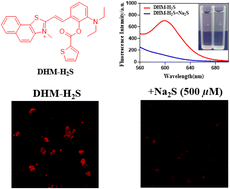
Hydrogen sulfide (H2S) plays a critical role in physiological and pathological processes, necessitating reliable tools for its real-time detection in biological systems. Herein, we present a novel fluorescent probe, DHM-H2S, designed for selective and sensitive H2S imaging in living inflammatory cells, C. elegans and inflammatory mouse models. The probe utilizes a selective H2S-triggered cleavage mechanism, resulting in a significant turn-off fluorescence response at 600 nm with minimal background interference. DHM-H2S exhibits high selectivity for H2S over other reactive sulfur and oxygen species, with a detection limit of 2.38 µM. In RAW 264.7 macrophages, the probe successfully visualized endogenous H2S fluctuations induced by lipopolysaccharide (LPS)-mediated inflammation. Furthermore, DHM-H2S enabled monitoring of H2S in C. elegans and mice, demonstrating its applicability in living systems. The probe's low cytotoxicity and membrane permeability make it a promising tool for studying H2S-related pathways in inflammatory and aging models. This work provides a robust platform for investigating H2S biology in live cells and organisms, offering potential applications in disease research and drug development.
 Please wait while we load your content...


