


 PLATFORM UPDATE:


Regeneration-on-a-chip: a planarian microfluidic device enabling automated cultivation, individual tracking and in vivo imaging for regeneration study
 *a
*a
Abstract
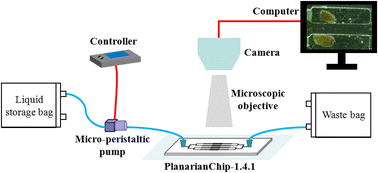
Freshwater planarian, a model organism renowned for its remarkable regenerative capabilities, is widely used in studies of regenerative mechanisms and stem cell biology. However, current research faces challenges in automated culture, long-term tracking, and real-time in vivo imaging at the single-worm level, limiting the efficient acquisition of accurate, individual-specific data and impeding deep investigation into regeneration dynamics. To address this, we developed a planarian microfluidic chip and an integrated microdevice for the automated cultivation, individual tracking, and in vivo imaging of planarian fragments. The PlanarianChip architecture incorporates parallel analytical channels, each comprising a combination of a loading channel/detection chamber. A novel loading/semi-closing strategy enables the precise and efficient loading and confinement of single planarian fragments from different body parts (head, pharynx, and tail) within detection chambers, achieving a 100% success rate, while allowing controlled medium renewal. We demonstrate the automated cultivation, reliable retention and parallel manipulation of individual fragments, supporting long-term tracking and live imaging throughout regeneration. The performance of the planarian microdevice was validated by systematically investigating the effects of liquid-renewal frequency, detection chamber size, and fragmented body parts on regeneration. With its flexible design, scalable fabrication, and support for automated fluidic control and individualized monitoring, this microdevice establishes a versatile and robust platform for regeneration studies.
 Please wait while we load your content...


