


 PLATFORM UPDATE:


Design of a “turn-on” colorimetric sensor for AChE inhibitors based on the instability of metal–organic frameworks
 *a
*a
Abstract
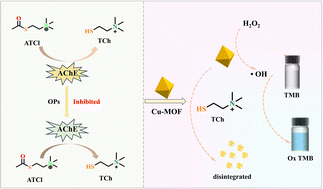
Generally, unstable metal–organic frameworks (MOFs) have been less commonly employed in many applications compared to stable MOFs. However, given the vast number of such unstable MOFs and the diversity of their instability behaviors, exploring their effective utilization is both necessary and significant. Unlike previous reports, this work mainly focused on the specific instability of Cu-BTC towards thiocholine, which was generated through the enzymatic hydrolysis of acetylthiocholine chloride (ATCl) by acetylcholinesterase (AChE). In detail, Cu-BTC exhibited outstanding peroxidase-like activity, efficiently catalyzing the oxidation of 3,3′,5,5′-tetramethylbenzidine (TMB) into its oxidized form, generating a strong UV–vis absorption peak at 655 nm. Upon the addition of AChE and its substrate ATCl, the substrate was hydrolyzed by AChE to yield thiocholine (TCl), which triggered the disintegration of Cu-BTC, thereby inhibiting TMB oxidation. As expected, based on the thiocholine-induced disintegration of Cu-BTC, the sensor enabled the selective and sensitive visual detection of the AChE inhibitor chlorpyrifos with a low detection limit of 8.95 pM. This method was successfully applied to pesticide analysis in spiked vegetable samples, achieving recoveries ranging from 98.83% to 109.81% with relative standard deviations below 2.57%. The proposed strategy not only provides a simple and visual approach for food safety monitoring but also opens new possibilities for exploiting unstable MOFs as smart sensing platforms.
 Please wait while we load your content...


