


 PLATFORM UPDATE:


Opportunities and challenges for analytical chemists: organ-on-chip devices as new approach methods (NAMs) for identifying potential toxins
 a
and
Matthew R.
Lockett
*ab
a
and
Matthew R.
Lockett
*ab
Abstract
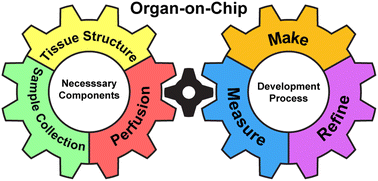
New approach methodologies (NAMs) integrate and leverage in vitro and in silico methods to predict human responses to new chemical entities (NCEs). Organ-on-chip (OoC) devices represent advanced in vitro models that best model organ-level function. The current rate of device innovation far outpaces the integration of these devices into existing workflows, which rely on monolayer cultures and animal models that have both proven poor predictors of NCE toxicity in humans. This perspective highlights the criteria we believe are needed for OoC devices to meet the biological and technical requirements for increased predictive power and reproducibility in current tissue culture laboratories: anatomically relevant structures that incorporate extracellular matrices and cellular compartmentalization, continuous perfusion for prolonged studies, and designs capable of collecting scalable amounts of sample material for quantitative analyses. Specifically, we focus on advances in readily accessible fabrication and analysis methods that are making OoC models a tractable solution for tissue culture laboratories as they move from monolayer cultures to more sophisticated models. We argue that OoC device adoption is limited not by biological relevance but by a lack of standardized regulatory benchmarks and insufficient compatibility with existing experimental workflows.
- This article is part of the themed collections: Analyst Review Articles 2026 and Analyst HOT Articles 2026
 Please wait while we load your content...


