


 PLATFORM UPDATE:


Differences in α-synuclein conformational states in physiologically relevant pH/Na+ concentrations and ammonium acetate solutions unveiled by native mass spectrometry

Abstract
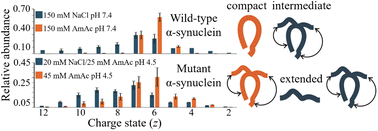
Native mass spectrometry implemented with theta emitters was used to demonstrate differences in conformational states of wild-type, A53T mutant, and truncated α-synuclein dissolved at physiologically relevant pH and Na+ concentrations compared to aqueous solutions of ammonium acetate. Specifically, 150 mM NaCl at pH 7.4, 20 mM NaCl at pH 4.5, and 15 mM NaCl at pH 7.2 were used to reflect, to some extent, the extracellular environment, lysosome, and cytosol, respectively. Analysis of charge state distributions obtained from physiologically relevant solutions vs. their ammonium acetate counterparts allows the comparison of α-synuclein conformational states. The protein shows relatively high conformational flexibility at 150 mM NaCl and pH 7.4, while it shows at least two different conformational states at 20 mM NaCl and pH 4.5. We observed a trend towards the adoption of less compact conformations at acidic pH, where Na+ appears to play a distinctive role in the adoption of different conformational states. Early-stage oligomers (dimer, pentamer, hexamer and heptamer) were also detected. Since oligomer formation was protein-specific, wild-type α-synuclein formed dimers while truncated α-synuclein formed pentamers, hexamers and heptamers, their abundances are consistent with kinetics of aggregation reported in the literature.
 Please wait while we load your content...


