


 PLATFORM UPDATE:


Exploring the role of microfluidic paper-based analytical devices in salivary diagnostics: from concept to clinical applications

Abstract
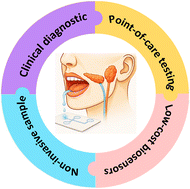
Microfluidic paper-based analytical devices (µPADs) have evolved significantly over the last few decades, from simple colorimetric strips to multifunctional lab-on-a-chip systems. This review focuses on advances in µPAD development, with particular emphasis on their application in salivary diagnostics. It covers the fundamental aspects of these devices, including their fabrication methods, detection strategies (with emphasis on colorimetry and electrochemistry), key biomarkers under investigation, and current challenges. Saliva has emerged as a promising diagnostic fluid due to its non-invasive collection, low risk, and diverse biochemical content, including proteins, enzymes, hormones, and nucleic acids. Salivary diagnostics on µPADs are closely aligned with the WHO's ASSURED criteria, making them highly promising for primary care and resource-limited settings. While some salivary biomarkers are clinically established, many remain understudied and require more accurate screening and comparison with conventional diagnostic methods. Our review also highlights how the remaining challenges, such as biomarker variability, integration of sample pretreatment steps, and interference from biological components, are being resolved by the scientific community. In doing so, we present the state-of-the-art and ongoing advances that are essential to establish µPADs as accessible and effective tools in global public health.
- This article is part of the themed collections: Analyst Review Articles 2026 and 150th Anniversary Collection: Sensors for Human and Planetary Health
 Please wait while we load your content...


