


 PLATFORM UPDATE:


Molecular imprinting of aptamer/carbamazepine complexes for the development of an optical nanosensor
 a
Jon
Ashley
*a
a
Jon
Ashley
*a
Abstract
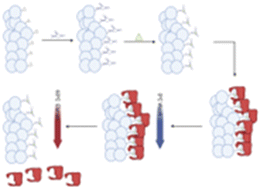
Monitoring anti-seizure medications (ASMs) such as carbamazepine is important to ensure that the correct dosage is given to patients, which provides the maximum therapeutic effect. However, therapeutic windows for carbamazepine are narrow and need to be highly tailored towards the patients. Therefore, there is a need for more precise analytical methods for monitoring ASMs. Here we report a new hybrid aptamer/molecularly imprinted nanoparticle (nanoMIP) optical nanosensor utilising fluorescence quenching for the detection of carbamazepine. The nanosensor relies on a co-operative based binding mechanism whereby when the aptamer binds to carbamazepine, it undergoes structural switching to change its 3D conformation and binds to the nanoMIP. Using a solid-phase imprinting technique, we synthesized nanoMIPs that recognise and bind to the aptamer/carbamazepine complexes. The resultant nanoMIPs can then selectively recognise and bind to the aptamer complex, resulting in a switch-off signal. The sensor demonstrated a limit of detection (LOD) of 12.7 nM and excellent sample recoveries of around 95% in 50% human serum.
- This article is part of the themed collection: 150th Anniversary Collection: Sensors for Human and Planetary Health
 Please wait while we load your content...


