


 PLATFORM UPDATE:


Recent developments in micro- and nanofluidic catalytic reactors utilizing ultra-small spaces

Abstract
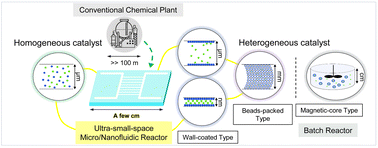
Microfluidics and nanofluidics have contributed much to the fields of chemistry and biochemistry. The small sizes of micro and nanochannels provide short diffusion lengths, resulting in highly efficient reactions with control over channel size, flow and temperature. In this review, progress in chemical and biochemical reactors based on micro and nanochannels is summarized. Various types of reactors such as homogeneous and heterogeneous catalytic reactors based on wall-coated, packed-bed or monolithic column designs are examined. The ultra-small spaces provided by micro and nanochannels allow rapid mixing and promote interactions between different phases. As such, faster reaction rates and better yields can be obtained using systems that are easy to operate. In addition, unique reaction mechanisms can be achieved based on the specific properties exhibited only by nanospaces. Although it remains challenging to balance high efficiency with a suitable production volume, new super-high-performance reactors allowing well-controlled processes with suitable productivity are anticipated in future. This advanced technology will represent significant progress in the areas not only of analytical chemistry and bioanalytical chemistry, but also chemical and biochemical engineering.
- This article is part of the themed collections: Analyst Review Articles 2026 and 150th Anniversary Collection: Microfluidics
 Please wait while we load your content...


