


 PLATFORM UPDATE:


Bacterial imprinted polymer-based detection of Escherichia coli using polydopamine on gold nanodendrite/graphene oxide modified electrodes
 ab
and
Kagan
Kerman
*ab
ab
and
Kagan
Kerman
*ab
Abstract
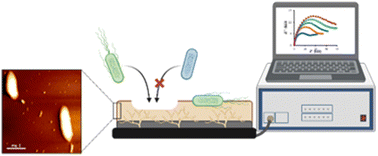
Pathogenic bacteria pose a major global threat to public health, environmental safety, and food quality, highlighting the need for rapid, sensitive, and cost-effective detection methods. In this study, an electrochemical biosensor based on a glassy carbon electrode modified with graphene oxide (GO), gold nanodendrites (AuNDs), and polydopamine (PDA) was developed with Escherichia coli imprinted on the surface. The sensor combines the high conductivity of AuNDs and GO with the molecular recognition capability of the imprinted PDA layer, providing excellent selectivity toward E. coli. By optimizing the bacterial removal method and the thickness of PDA film, the biosensor exhibited a wide linear detection range (1.0 × 101–1.0 × 10⁴ CFU mL−1) and a remarkably low detection limit of 1.5 CFU mL−1. It demonstrated high recovery (96–103%) when tested with real creek water and wastewater samples. The proposed bacterial imprinted polymer-based biosensor offers a promising platform for portable detection of E. coli in environmental monitoring applications.
- This article is part of the themed collection: 150th Anniversary Collection: Electrochemistry and Electroanalytical Approaches
 Please wait while we load your content...


