


 PLATFORM UPDATE:


Recent advances in MXene nanozymes: synthesis, surface modifications, catalytic properties, and their emerging roles in biosensing and therapeutic applications

Abstract
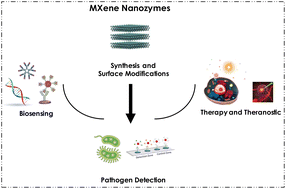
MXene nanozymes have emerged as an important class of nanomaterials, bridging materials science, chemistry, and biomedicine with their exceptional catalytic properties, tunable surface chemistry, and multifunctionality. The present review highlights recent advancements and future prospects in the development and application of MXene-based nanozymes, emphasizing their potential in biosensing, therapeutics, and theranostics. Environmentally friendly and scalable synthesis methods, including HF-free etching and enzymatic approaches, are paving the way for large-scale production, enabling commercial applications such as point-of-care diagnostics and wearable sensors. Surface engineering and hybridization strategies such as stimuli-responsive coatings and MXene–MOF composites are enhancing selectivity and functionality, whereas layered architectures facilitate multi-enzyme cascade systems. In diagnostics, MXene nanozymes offer robust platforms for portable and personalized healthcare, including continuous glucose monitoring and pathogen detection in resource-limited settings. Therapeutically, they hold promise as adjuvants in cancer therapy, improving tumor oxygenation and enabling image guided treatment. Additionally, their high surface area and biocompatibility position them as versatile carriers for gene therapy and drug delivery. However, clinical translation necessitates rigorous biosafety assessments and regulatory compliance, particularly concerning fluoride content and long-term toxicity. Interdisciplinary collaboration will be critical to overcoming these challenges and translating lab-scale innovations into real-world solutions. With continued exploration of novel MXene compositions (e.g., nitrides, oxynitrides) and catalytic functions, MXene nanozymes are poised to transform nanomedicine, offering early diagnostics and targeted therapies. This review underscores the importance of MXene nanozymes from fundamental research to clinical impact, outlining a roadmap for future advancements in this rapidly evolving field.
- This article is part of the themed collections: Analyst Review Articles 2026 and Analyst HOT Articles 2026
 Please wait while we load your content...


