


 PLATFORM UPDATE:


Continuous monitoring of glutamate using electroactive templated polymers as synthetic molecular receptors

Abstract
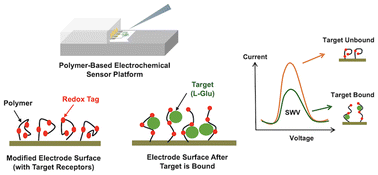
Selective and spatiotemporally resolved monitoring of glutamate in the brain is essential for understanding its role in many brain functions as well as in the progression of various mental disorders. However, achieving accurate time resolved glutamate detection has been challenging due in part to the lack of glutamate-binding receptors that can offer both target selectivity and continuous measurement capability. To address this challenge, we have developed a novel polymer-based electrochemical biosensor designed to enhance selectivity for glutamate. Our proposed biosensor incorporates an innovative templated polymer-based target receptor, which selectively binds to the glutamate molecule. Furthermore, the reversible binding kinetics enable continuous glutamate detection with a time resolution of approximately 1 minute and a detection limit of 88.5 nM in artificial cerebrospinal fluid (ACSF) buffer. Additionally, due to the synthetic target-imprinted receptors, the sensor exhibited high selectivity for glutamate in the presence of other interfering neurochemicals GABA, glycine, and aspartate. These results indicate that the proposed sensor technology holds potential for monitoring glutamate in real physiological samples with possible use in clinical settings.
 Please wait while we load your content...


