


Flexible hydrogel sensor based on MoS2 for highly selective dopamine detection against catecholamine cross-interference
 c
Qiyan
Wang
*ad
c
Qiyan
Wang
*ad
Abstract
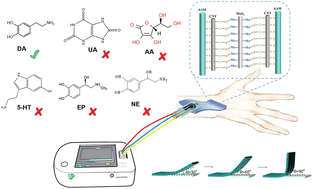
Real-time monitoring of dopamine (DA) is vital for understanding neurophysiological processes and diagnosing neurological disorders. Flexible and stretchable sensors are particularly attractive for wearable or implantable bioelectronics, as they offer conformal contact with soft, dynamic biological tissues. However, achieving high selectivity in such platforms remains a major challenge, especially in the presence of structurally similar catecholamines such as epinephrine (EP), which often coexist with DA in physiological environments. Here, we report a highly stretchable hydrogel-based DA sensor constructed from acrylamide (AAM), carbon nanotubes (CNTs), and molybdenum disulfide (MoS2). CNTs enhance the electrical conductivity of the hydrogel network, while MoS2 provides selective affinity toward DA, enabling strong molecular discrimination against EP and common electroactive interferents such as ascorbic acid and uric acid. The resulting AAM/CNT/MoS2 hydrogel exhibits excellent mechanical durability, maintaining structural integrity under 50% strain and surviving 15 repeated stretch-release cycles (0–50%) without loss of sensing performance. The sensor achieves a low detection limit of 6.1 nM and maintains reliable DA response even in the presence of high concentrations of EP. This work presents a promising strategy toward soft, selective, and interference-resilient biosensors for dynamic neurochemical sensing.
 Please wait while we load your content...


