


 PLATFORM UPDATE:

On-chip filtration enrichment and ultrasensitive nanozyme-catalyzed colorimetric detection of Streptococcus pneumoniae in saliva samples

Abstract
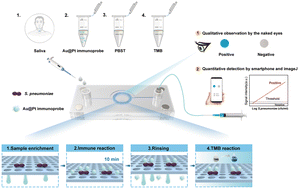
Streptococcus pneumoniae (S. pneumoniae) is a major cause of respiratory infections, requiring rapid, sensitive, and accessible diagnostic tools for early intervention, especially in resource-limited settings. Herein, we developed a microfluidic immunosensor integrated with a 0.4 μm pore-size filter membrane and antibody-functionalized Au@Pt nanozymes for the ultrasensitive colorimetric detection of S. pneumoniae in saliva samples. The device operates through four sequential steps: bacterial enrichment, immunoprobe binding, impurity removal, and nanozyme-catalyzed TMB oxidation with a distinct blue signal. The system achieved a detection limit of 21 cfu mL−1, representing a 21-fold improvement over HRP-based sensors and a 476-fold enhancement compared to conventional ELISA kits. It showed high accuracy with recovery rates of 89.2–112.5% in spiked saliva samples and showed excellent agreement with qPCR results (R2 > 0.98). The modular and cost-effective microfluidic chip, combined with smartphone-based signal readout, highlights its strong potential for point-of-care testing in under-resourced settings.
 Please wait while we load your content...


