


 PLATFORM UPDATE:


Development and in vitro/in vivo evaluation of a triply periodic minimal surface-based 3D-printed anti-infective bone scaffold with spatiotemporally controlled osteogenesis
 *b
*b
Abstract
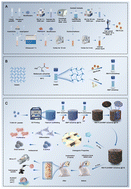
Infectious bone defects (IBDs), marked by the concurrent presence and progressive aggravation of both bone infection and bone loss, represent a significant clinical challenge. Traditional staged treatment, namely initial infection control followed by bone reconstruction, often involves multiple surgeries, extended treatment durations, and high costs. Herein, we developed a novel 3D-printed titanium alloy scaffold for IBDs, integrating spatiotemporally controlled dual-drug delivery. The scaffold features a triply periodic minimal surface structure with a radial pore gradient, increasing from the core to the periphery. The inner layer with smaller pores is loaded with bone morphogenetic protein-2 (BMP-2), whereas the outer layer with larger pores incorporates RM-PLGA microspheres for the sustained release of rifampicin and moxifloxacin. The gelatin methacryloyl (GelMA) hydrogel serves as the coating matrix for drug immobilization. This design enables a sequential therapeutic strategy, initial sustained antibacterial activity, followed by osteoinductive stimulation, facilitating a dynamic repair process from early infection control to later-stage bone regeneration. In vitro assays confirmed that the RM-PLGA/BMP-2 (GelMA)@TiS scaffold exhibits potent antibacterial activity, cytocompatibility, osteogenic potential, and extracellular matrix mineralization. In vivo results further demonstrated its efficacy in suppressing Staphylococcus aureus infection while promoting bone regeneration.
- This article is part of the themed collection: Journal of Materials Chemistry B Chinese New Year
 Please wait while we load your content...


