


 PLATFORM UPDATE:


Mortise-tenon inspired silk fibroin–tannic acid/platelet-rich fibrin composite hydrogel enhances bone regeneration
 d
Jiaojiao
Yang
*a
d
Jiaojiao
Yang
*a
Abstract
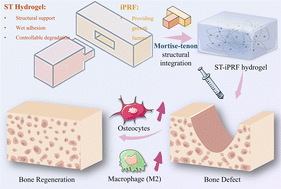
The primary challenge in bone tissue engineering is that single materials cannot simultaneously satisfy both biological function and physical support requirements. Conventional approaches fail due to uncontrolled degradation kinetics, poor growth factor retention, and unstable material interfaces that compromise therapeutic efficacy under dynamic physiological conditions. Inspired by ancient Chinese mortise-tenon joinery, this study proposes a “mortise-tenon structural integration” strategy, designing a composite system of silk fibroin–tannic acid (ST) hydrogel and injectable platelet-rich fibrin (iPRF). In this system, the ST hydrogel serves as a “mortise” structure providing excellent wet adhesion, self-healing ability, and controllable degradation characteristics, while iPRF acts as the “tenon” component carrying specific bioactive factors. This precise structural complementarity addresses the inherent limitations of single materials: iPRF, despite being rich in growth factors, has rapid degradation and insufficient mechanical properties; ST hydrogel provides excellent structural support but lacks bone inductive activity. The composite system demonstrates outstanding injectability, adhesiveness, and sustained growth factor release capability, significantly promoting the osteogenic differentiation of MC3T3 cells and upregulating osteogenesis-related gene expression. In vivo experiments confirmed that the composite hydrogel significantly enhanced bone repair in rat cranial and rabbit mandibular defect models by optimizing the immune microenvironment. This design based on structural complementarity and functional synergy provides an innovative solution for complex bone defect repair.
 Please wait while we load your content...


