


 PLATFORM UPDATE:


In vitro and in vivo characterization of novel magnesium alloy implants enhanced by hydrothermal and sol–gel treatments for bone regeneration

Abstract
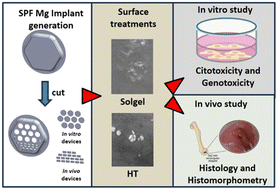
Magnesium alloys are emerging as promising materials for biodegradable orthopedic implants due to their mechanical strength and biocompatibility. However, their clinical use is hindered by rapid degradation and hydrogen gas evolution, which can compromise implant stability and bone healing. This study investigates the biocompatibility, genotoxicity, and osteointegration of magnesium implants (AZ31) produced via Superplastic Forming and enhanced through Hydrothermal and Sol–Gel surface treatments. Both techniques produced uniform Mg(OH)2-based coatings, but only alloy with hydrothermal treatment exhibited a markedly slower in vitro degradation. Cytotoxicity and Ames mutagenicity assays confirmed the biocompatibility and non-mutagenic nature of all implant types. In vivo evaluation in a rat femoral defect model revealed successful bone formation around all implant types, with comparable trabecular bone area. However, surface-treated implants showed a significantly lower bone-to-implant contact compared to the control AZ31 alloy, with solgel-treated alloys exhibiting an accelerated degradation rate and higher hydrogen release, which may influence tissue integration. These results highlight the role of surface modification in tuning degradation behavior and bone interface characteristics, with solgel-treated alloys resorbing faster. The combination of superplastic forming processing with strategic surface treatments offers a promising approach to achieving controlled biodegradation, although further optimization is needed to improve bone-implant integration. This work supports the further development of surface-engineered Mg implants for safe and functional orthopedic applications.
 Please wait while we load your content...


