


 PLATFORM UPDATE:


Mechanistic and fluorometric investigations of asparagine sensing via catalytic hydrolysis mediated by the 2D-IMCR using Zn(ii)–bipyridine nanosheets
 *abcdef
Abstract
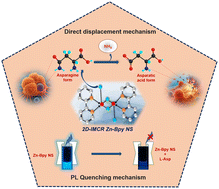
A novel fluorescent sensor based on the 2D ion molecule chelation reaction (2D-IMCR), leveraging the unique coordination chemistry of ZnCl2 (Zn(II)) and 2,2′-bipyridine (Bpy), has been developed to produce a significant fluorescence quenching response via the strong interaction with L-asparagine (L-Asp). The importance of asparagine in various metabolic pathways and protein synthesis makes it significantly important as a biomarker and numerous reports indicate the need for its detection. The sensor exhibits an emission peak at 455 nm at an excitation wavelength of 365 nm in distilled water (DI water), providing a robust signal for the detection of L-Asp. The fluorescence quenching mechanism is due to the hydrolysis of L-Asp by Zn(II)–OH species, which is formed by the deprotonation of a Zn(II)-bound water molecule within the 2,2′-bipyridine–zinc (Zn–Bpy) nanosheets. This Zn(II)–OH species acts as a nucleophile, catalyzing the reaction and producing ammonia, resulting in decreased fluorescence intensity. Remarkably, the developed sensor has a limit of detection of 10.07 nM across a linear range of 20–100 nM at pH 6.5–7. The high selectivity and sensitivity of Zn–Bpy nanosheets to L-Asp when compared to other analytes used in this study and previously developed sensors make it a superior tool for biochemical analysis and diagnostic applications, enabling rapid and precise monitoring of L-Asp levels. Furthermore, the novel approach developed in this study emphasizes the potential of metal–ligand complexes for advancing the 2D world.
 Please wait while we load your content...


