


 PLATFORM UPDATE:

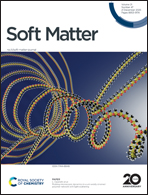
Observation of unique stable nano-assemblies of a lipidated glucagon-like peptide 1 analogue

Abstract
Lipidation of glucagon-like peptide 1 (GLP-1) has been widely investigated and utilized as a strategy for the half-life extension of the drug in vivo. Several lipidated variants of GLP-1 are used for treatment of type 2 diabetes and obesity and many more are still in development. Lipidated GLP-1 variants show an increased tendency to oligomerize due to their amphiphilic nature. In this work, we report the formation of uniform non-covalent nano-assemblies with vesicular/toroidal morphology which form rapidly by the self-assembly of a lipidated analogue of GLP-1, abbreviated as GLP-1-Am(17, γ-Glu-palm). This analogue shows a high similarity with liraglutide, a commercially available GLP-1-based therapeutic, differing only by the lipidation position shifted by three amino acid residues towards the N-terminus and C-terminal amidation. The formation of vesicular/toroidal assemblies was, nevertheless, reported solely for GLP-1-Am(17, γ-Glu-palm) not for other lipidated analogues studied under the same conditions. The assemblies were formed in a narrow pH range around pH 7.0 and had an average diameter of 21 nm and a high content of α-helical structure. When further incubated at 37 °C with agitation over several days, the assemblies were observed to aggregate into larger amorphous β-structure-rich species. Two distinct kinetic phases of aggregation were observed in the fluorescence assay with ANS dye indicating an accumulation of an aggregation intermediate. We believe that this work demonstrates the morphological diversity of species formed by the self-assembly of an important therapeutic peptide, which may be beneficial especially due to their potential to act as slow-release depots.

- This article is part of the themed collection: Soft Matter Open Access Spotlight 2025
 Please wait while we load your content...


