


 PLATFORM UPDATE:


Production of biofuel from wood hydrolysates using oleaginous yeast Cutaneotrichosporon curvatus

Abstract
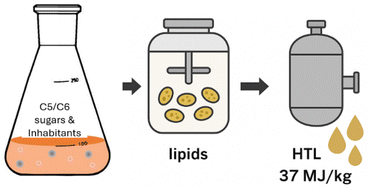
We investigate the use of hydrolysate from preconditioned pine wood chips using dilute sulfuric acid for biofuel production. High-performance liquid chromatography analysis of the hydrolysate indicated the presence of pentoses, hexoses, and various degradation products, including levulinic acid, furfural, and hydroxymethylfurfural. Both detoxified and non-detoxified lignocellulosic hydrolysates were examined for lipid production (biofuel intermediates) using the oleaginous strain Cutaneotrichosporon curvatus. After five days of growth, C. curvatus achieved a maximum dry cell weight of 0.93 g per g of mixed sugars and a lipid yield of 0.23 g per g of mixed sugars. The lipid content represented 25% of the dry cell weight, suggesting that C. curvatus is a promising alternative for utilizing both C5 and C6 sugars derived from pretreated lignocellulosic biomass. Hydrothermal liquefaction of the C. curvatus broth was conducted under subcritical and supercritical water conditions. The bio-oil was extracted using dichloromethane, and the calculated higher heating values of the bio-oil were found to be 26.4, 34.4, and 37.2 MJ kg−1 at 300 °C, 350 °C, and 375 °C reaction temperatures, respectively. The composition of biocrude was analyzed using GC-MS and identified oleic, palmitic, stearic, pentadecanoic, palmitic, and heptadecanoic acids. The results of this study demonstrate an integrated pathway with the potential to upgrade a mixed sugar stream into fuel intermediates.
 Please wait while we load your content...


