


 PLATFORM UPDATE:


Species-specific discrimination of bacterial biofilms using a ratiometric fluorescence sensor array and machine learning
 *c
Aaron M.
Mohs
*ade
*c
Aaron M.
Mohs
*ade
Abstract
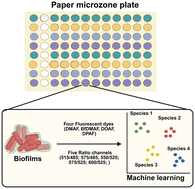
Biofilms are intricate bacterial communities encased in a self-produced extracellular matrix (ECM) of DNA, lipids, proteins, and polysaccharides. The diverse ECM composition across bacterial species significantly influences the progression of biofilm-associated infections, making precise identification crucial for effective treatment. Traditional methods such as biochemical assays, MALDI-TOF mass spectrometry, DNA sequencing and culturing provide valuable insights but have notable drawbacks, including time-consuming procedures, high costs, and the need for specialized equipment and trained personnel. These limitations hinder the rapid and widespread adoption of biofilm identification in clinical settings, underscoring the need for more streamlined, accurate, and accessible methods. In this study, we employed a paper-based ratiometric sensor array with fluorescent dyes (3-hydroxyflavone derivatives) pre-adsorbed onto paper microzone plates to identify bacterial biofilms. The fluorescence signals from the sensor upon interaction with biofilms were analyzed using linear discriminant analysis and different machine learning algorithms, including neural networks, support vector machines, and naïve Bayes classifiers. Our results show that the sensor array accurately distinguishes between biofilms of eight species with 97.5% classification accuracy. It effectively identifies individual bacteria at OD600 as low as 0.002 o.u. Additionally, using neural networks, the sensor array achieves more than 95% accuracy in distinguishing planktonic bacteria from biofilms and shows over 85% accuracy in identifying clinical bacterial species and biofilms. These findings highlight the sensor's potential for high-precision biofilm identification in laboratory and clinical settings, offering a valuable tool for advancing biofilm research and enhancing clinical diagnostics.
 Please wait while we load your content...


