


 PLATFORM UPDATE:


Strategic microstructure manipulation of porous materials for advanced corrosion protection in metallic alloys

Abstract
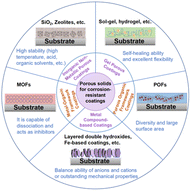
Corrosion of alloys poses a significant threat to infrastructure sustainability, economic stability, and environmental safety, necessitating innovative anticorrosion strategies. Porous solids, characterized by large surface area, tunable porosity, and versatile functionalization, have emerged as promising candidates for developing advanced anticorrosion coatings. This review encompasses diverse porous solids, including inorganic non-metallic solids, gels, metal–organic frameworks (MOFs), and porous organic frameworks (POFs), highlighting their roles in synthesis, structural regulation, corrosion inhibitor storage/release, and current challenges. Key topics include fabrication methods (e.g., sol–gel, electrochemical deposition, templating), anticorrosion mechanisms (barrier effects, active inhibition, self-healing), and strategies to improve performance (surface modification, composite design, smart responsiveness). The review concludes with insights into future directions, emphasizing sustainable synthesis, multifunctional integration, and industrial scalability.
- This article is part of the themed collections: 15th Anniversary: Chemical Science Leading Investigators collection and 2025 Chemical Science Perspective & Review Collection
 Please wait while we load your content...


