


 PLATFORM UPDATE:


Dual-emission ratiometric fluorescent sensor based on tannic acid carbon dots and eosin for selective detection of paraquat in water and food samples

Abstract
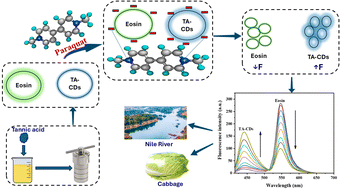
Paraquat, a highly toxic herbicide widely used in agriculture, poses severe health risks necessitating sensitive analytical methods for residue monitoring in environmental and food samples. This work presents a novel dual-emission ratiometric fluorescent sensor combining tannic acid-derived carbon dots (TA-CDs) and eosin for rapid paraquat detection. The dicationic paraquat simultaneously induces aggregation-enhanced fluorescence of TA-CDs at 445 nm while quenching eosin emission at 545 nm, generating a self-calibrated ratiometric signal (F445/F545). The TA-CDs were comprehensively characterized using TEM, Raman, FTIR, XPS, and spectroscopic techniques. Under optimized conditions, the sensor exhibited excellent linearity (5.0–150.0 nM, R2 = 0.9973) with a detection limit of 2.11 nM. The mechanism was validated through spectral overlap analysis, zeta potential measurements, and TEM imaging. Exceptional selectivity was demonstrated against common interferants due to the unique dual-recognition requirement. The method achieved excellent recoveries of 96.4% to 98.2% in Nile River water and 96.9% to 99.6% in cabbage extracts. Application to agricultural cabbage samples at different days post-application revealed decreasing paraquat residues from above to below the maximum residue limit, demonstrating practical capability for food safety monitoring. This metal-free, cost-effective platform offers rapid response and simplified operation for routine paraquat surveillance in environmental and agricultural systems.
 Please wait while we load your content...


