


 PLATFORM UPDATE:


Influence of green fillers from oil palm trunk (Elaeis guineensis) on the thermal stability, tensile performance and morphological properties of reinforced epoxy composites

Abstract
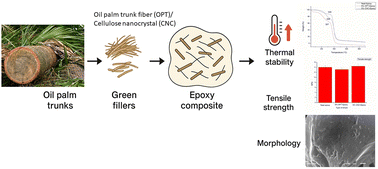
This study was done to investigate the effects of the addition of different green nanofillers as reinforcement materials, which were cellulose nanocrystals (CNCs) derived from oil palm trunk and extractive-free oil palm trunk (OPT), on the mechanical and thermal properties of epoxy composites. CNCs were extracted from oil palm trunk and oil palm trunk after extractive removal was used as green fillers, and 5% of both the fillers were incorporated into epoxy to create epoxy composites. TEM and XRD analyses were employed to characterize OPT and CNCs. The mechanical performance was evaluated using a tensile test by measuring the tensile strength, modulus of elasticity, and elongation at break. TGA was employed to evaluate their thermal stability. TEM results revealed a rod-like shape for the CNC sample, with a crystallinity value of 52.74%, as obtained by XRD. SEM results revealed the good bonding of CNC with epoxy, with the existence of a sharp intensity peak at 921 cm−1 that corresponded to the epoxide ring vibration from epoxy. This was followed by peaks at 2950 cm−1 and 2857 cm−1. Thus, the tensile properties of the 5% CNC–epoxy composite were enhanced, with strength and stiffness increasing by 32% and 12%, respectively. TGA results revealed the higher thermal stability of the 5% CNC–epoxy composite, with degradation onset obtained at a higher temperature (338 °C) than that of neat epoxy (334 °C), indicating almost a 1% increment. Thus, CNC–epoxy can be used for paneling and composite applications.
 Please wait while we load your content...


