


 PLATFORM UPDATE:


Bioleaching of sludge from acid-leached waste traction batteries used in electric vehicles for the extraction of Ni and Co using optimized microbial consortia
Abstract
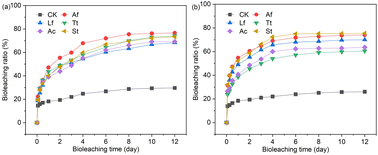
Bioleaching of heavy metals from sludge from acid-leached waste lithium batteries is limited by the restricted maximum acid-producing ability of a single bacterium. Compatibility of acidophilic autotrophic bacteria in bioleaching is desirable. Herein, five microorganisms, including Acidithiobacillus ferrooxidans (Af), Leptospirillum ferriphilum (Lf), Thiobacillus thiooxidans (Tt), Acidithiobacillus caldus (Ac), Sulfobacillus thermotolerans (St) and their mixed microbial consortia (MC), were applied to leach Ni and Co from sludge from acid-leached waste lithium batteries. Bioleaching kinetics were investigated as functions of single bacterium species, MC species, Ac and St ratios in MC, and solid/liquid ratio. Compared with the single bacterium, the bioleaching ratios of MC with 20% of Ac and 20% of St (45 °C and a solid/liquid ratio of 10%) were 1.17 times higher for Ni (bioleaching ratio of 88.4% and equilibrium time of 8 days), and MC with 25% of St (40 °C and solid/liquid ratio of 10%) presented 1.18 times higher bioleaching efficiency for Co (bioleaching ratio of 75.4% and equilibrium time of 6 days). The quantitative ratios of Ni and Co species, including acid-soluble, reducible, oxidizable, and residual states in the remaining bioleached sludge, were determined. MC presented optimal bioleaching efficiency with 90.3% for the leached fraction and 5.9% for the residual fraction for Ni, and 82.9% for the leached fraction and 11.8% for the residual fraction for Co. This study provides a valuable reference for efficiently bioleaching waste lithium batteries.
 Please wait while we load your content...


