


 PLATFORM UPDATE:


Accelerating the “one-pot” melt polycondensation for thermotropic liquid crystalline polymers by introducing a second acetylating agent
 *a
*a
Abstract
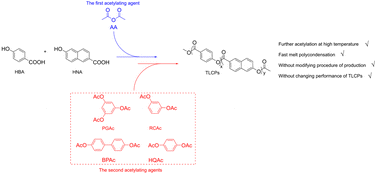
Thermotropic liquid crystalline polymers (TLCPs) have been widely studied since the 1970s, and producing TLCPs in a more efficient way for both cost saving and performance enhancement has always intrigued us. One of the most effective ways is further increasing the degree of acetylation of monomers. Herein, we report a strategy of introducing a second acetylating agent, acetylates of polyphenols, which works at high temperatures when the first acetylating agent, acetic anhydride, is removed from the system. A model reaction proved that benzene-1,3,5-triyl triacetate (PGAc) could efficiently acetylate phenol to form phenyl acetate at 200 °C in a short time (1 h), which was evidenced by 1H NMR. Adding the second acetylating agent, PGAc, in the polycondensation of HBA and HNA without modifying the process flow accelerated the propagation stage even in the absence of catalyst as shown by the data of distillate with time and the evacuation time of the melt polycondensation. Furthermore, other acetylates of polyphenols were also found to be acetylating agents to accelerate the polymerization and form a series of new TLCPs, inserting a small amount of which didn’t affect the chemical structures and thermodynamic properties much. The strategy of introducing a second acetylating agent shows great potential in both theoretical research and practical application.
 Please wait while we load your content...


