


 PLATFORM UPDATE:


From trash to sensor: banana peel-derived silver nanocomposite as a mimic enzyme for cholesterol detection and antibacterial applications
 *a
and
*a
and
Abstract
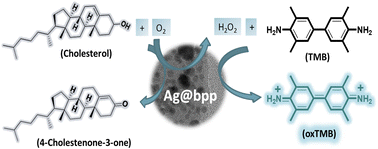
Cholesterol is the main building block of biological membranes and also a precursor of vitamin D, bile acids, and hormones. However, its abnormal concentration causes cardiovascular diseases, hypertension, hypothyroidism, and anemia. Therefore, it is crucial to keep a check on the amount of cholesterol in diet and blood serum. Herein we report a new, simple, and efficient colorimetric approach for the monitoring of cholesterol levels. In addition, the synthesized silver nanoparticles deposited over banana peel powder (Ag@bpp) were tested for their antibacterial potential against Klebsiella pneumoniae (K. pneumoniae), Escherichia coli (E. coli), Staphylococcus aureus (S. aureus), and Pseudomonas aeruginosa (P. aeruginosa). The nanozyme was prepared by simple reduction in a basic medium over the surface of banana peel powder (bbp) and characterized by various spectroscopic and morphological techniques. The Ag@bpp showed both oxidase and peroxidase enzyme-like activities simultaneously without the use of external hydrogen peroxide. The hydrogen peroxide produced as a result of oxidation of cholesterol could oxidize 3,3′,5,5′-tetramethylbenzidine (TMB) to produce a blue-green colored product, oxidized TMB (oxTMB). Besides this observable colorimetric change, it was also confirmed by a UV-visible spectrophotometer in terms of absorbance to find the exact concentration of cholesterol. The optimized conditions were found to be 1.8 mg of the mimic enzyme, pH 5, TMB 4 mM, and 4 minutes of incubation time. The fabricated sensor displayed a linear range for the analyte in the range of 2–20 mM with a 0.029 mM limit of detection. The nanozyme was also successfully applied for cholesterol detection in human serum samples with excellent reproducibility. The synthesized nanocomposite also showed excellent inhibitory effect against various bacterial strains. These findings prove that the synthesized nanocomposite is not only effective in colorimetric detection of cholesterol but also has strong antibacterial activities.
 Please wait while we load your content...


